Cold Plunge 101: Temperature, Time, and Tubs
A buddy of mine, Kyle, trains BJJ four nights a week out of a garage gym in Boise. Last October he texted me a photo of a stock tank sitting on a cracked patio slab, a bag of ice from Costco melting on the grass next to it, and a single-word caption: “Upgrade?” He wanted to know if a real cold plunge setup was worth the money or if he should just keep buying ice. That conversation turned into a three-hour deep dive on chillers, pad prep, and electrical runs, and it’s basically the conversation I’m writing here.
In short, a cold plunge is a legitimate home upgrade that pays back daily when the boring fundamentals are handled. Right footprint, right chiller for your tub volume, stable pad underneath, and any 240V work routed through a licensed electrician. Most home builds land between $4,500 and $14,000 depending on tub material, chiller class, and whether you’re pouring concrete. The rest of this piece is the long version.
Why People Overthink the Tub and Underthink Everything Else
The acute physiology is simple enough. Cold immersion triggers vasoconstriction, a norepinephrine spike, and a mood bump that makes you feel weirdly alive for an hour afterward. The umbrella term is hormesis (the body adapting to controlled stress), and cold water is the most accessible version of it you can install in a backyard.
But here’s where this falls apart for a lot of buyers: they obsess over the unit and barely glance at the site. The same $6,000 tub can feel like a steal on a well-prepped concrete pad with a clean dedicated circuit, and like a nightmare sitting on settled gravel with an extension cord snaking across wet grass. Kyle’s cracked slab? That was problem number one, not the stock tank.
If you’re in this market, the questions almost always cluster the same way. How big? What does the install actually involve? What’s the real all-in cost? And does the science hold up? Let’s go in order.
Reading a Spec Sheet Without Getting Fooled
Spec sheets are where cold plunge buyers trip hardest. Most people fixate on temperature range and ignore everything else. Here’s the short list that actually matters:
Residential tubs typically hold 80 to 120 gallons. Chillers range from 1/3 HP to 1 HP. Target water temp sits between 40°F and 55°F. Session length for most adults is 2 to 5 minutes.
The single most important match is chiller to tub volume. Undersized chillers run constantly and burn out components. Oversized ones cycle too aggressively and waste electricity. Read the manufacturer’s published sizing chart. Don’t guess based on a Reddit thread from 2021.
A 1/3 HP chiller can hold 50°F in a small insulated tub in a temperate climate. It will absolutely struggle in a hot garage in August. If you live anywhere that sees sustained 90°F+ ambient temps, step up to 1/2 HP minimum.
Check filtration micron rating, ozone and UV sanitation options, and tub material (rotomolded plastic vs. stainless steel vs. acrylic). Stainless is the longest-lived but the most expensive. Rotomolded is the workhorse middle ground for most residential builds.
What the Research Actually Says (and Doesn’t)
Cold-water immersion research has matured quickly. Heinonen and Laukkanen reviewed cold-water immersion outcomes in 2018 (Frontiers in Physiology) and reported reductions in self-reported muscle soreness, modest improvements in mood, and changes in catecholamine signaling after 2 to 5 minute immersions at 50°F to 59°F.
A 2022 systematic review by Allan and colleagues (European Journal of Applied Physiology) examined cold-water immersion after resistance training and found real recovery benefits, with one important caveat: very frequent immersions immediately after lifting may blunt some hypertrophy signaling. The practical takeaway for home users is to keep cold sessions between 2 and 5 minutes and separate them from heavy resistance training by 4 hours or more when muscle growth is the priority.
I’ll say what the studies imply but don’t always spell out: for recreational athletes and weekend warriors doing this for soreness and mood, the protocol is forgiving. For competitive lifters chasing every ounce of hypertrophy, timing matters more than most influencer protocols suggest.
Cardiovascular response deserves real respect. Cold exposure spikes heart rate and blood pressure within seconds. Adults with arrhythmias, uncontrolled hypertension, Raynaud’s phenomenon, or who are pregnant should clear cold immersion with a physician before any home use. This isn’t a hedge paragraph; it’s a genuine safety line.
The Install: Pad, Power, and Water Care
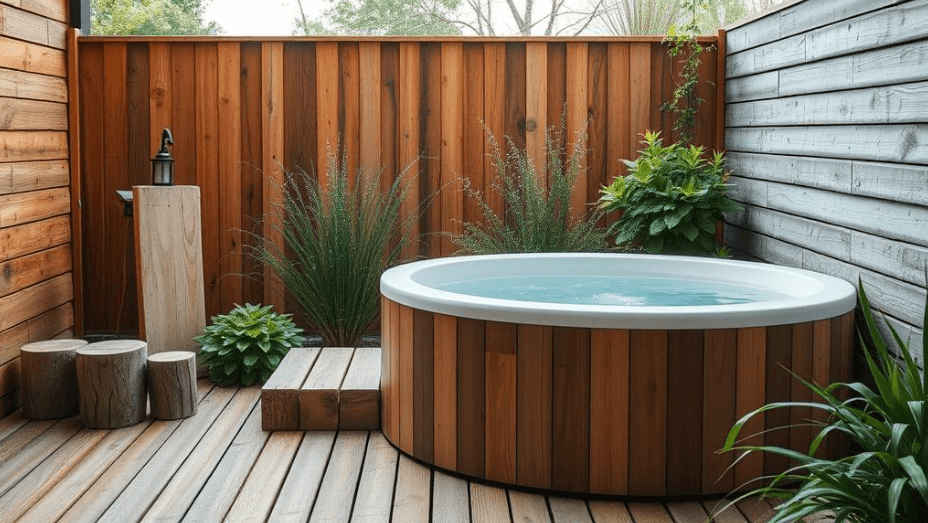
A cold plunge install is simpler than a sauna build. Most modern residential units run on a standard 110V outlet with integrated chiller, ozone, and filtration factory-wired. Your job is the pad, the water fill, the GFCI outlet, and ongoing maintenance.
The pad. This is what people underestimate. A full tub plus chassis puts 800 to 1,200 pounds on a small footprint. A 4-inch compacted gravel pad with a drainage layer works for many backyard installs. A 4-inch reinforced concrete pad is the right call on soft soil or in freeze-thaw climates. Kyle’s cracked slab? We poured a new 5×5 pad for about $1,400, which was the single best investment in the whole project.
The electrical. Plug into a properly grounded GFCI outlet on its own circuit. If your nearest outlet is more than 25 feet away or shares a circuit with high-draw appliances, have a licensed electrician run a dedicated 20A 110V circuit. Some commercial-grade chillers require 240V, which always means a licensed electrician and usually a permit.
Water care. Most home cold tubs combine ozone, UV, and a 5-micron filter cartridge to keep water clear for 6 to 12 weeks between drains. Test pH and sanitizer weekly. Drain and refill on the manufacturer’s schedule. It’s about as demanding as maintaining a small hot tub, which is to say: not hard, but not optional.
What It Actually Costs, All-In
The all-in number matters more than the sticker price. Budget the unit, the pad, the wiring, any permits, and a small reserve for accessories and the first year of maintenance.
For residential insulated tubs with an integrated chiller, expect $4,500 to $7,500. Commercial-grade stainless builds with full filtration run $9,000 to $14,000. Stock-tank DIY setups land closer to $400 to $900 but require manual ice (and the ongoing cost and hassle of buying it).
Pad costs: $400 to $900 for gravel, $1,200 to $2,400 for concrete. Electrical run for a dedicated circuit: $600 to $1,800 depending on distance and whether you’re going 110V or 240V.
On the tax side, some home wellness equipment can be reimbursed through HSA or FSA accounts when a Letter of Medical Necessity (LMN) is on file. Services like TrueMed issue LMNs after a short clinician review for conditions where cold therapy is a recognized treatment input. Eligibility is patient-specific and IRS rules are strict. Talk to your tax advisor before assuming a purchase qualifies.
Stock Tank vs. Purpose-Built: The Honest Comparison
A purpose-built insulated tub with a 1 HP chiller holds 39°F to 45°F all day with no manual ice. A stock-tank setup can hit the same temperatures, but you’re buying and hauling bags of ice (or converting a chest freezer, which is cheap but lacks filtration and is mechanically marginal at best).
Think of it like the difference between a window AC unit and a mini-split. Both cool a room. One you’ll curse every summer; the other you’ll forget about because it just works.
The right answer is rarely the cheapest unit or the most expensive one. It’s the build that matches your climate, your space, your install constraints, and the routine you’ll actually keep. If you’re comparing specific model lineups and price tiers, this resource walks through specs, pricing, and installation considerations for a home setup. Worth bookmarking before you commit.
When to Bring in a Pro
Three moments in a cold plunge project where a professional pays for themselves:
The pad. Especially in freeze-thaw climates or on soft soil. A pad that settles or cracks under a loaded tub is vastly more expensive to fix after the fact.
The electrical. Any 240V work. Full stop. And honestly, even a 110V dedicated circuit is worth having an electrician handle if the run is long or the panel is old.
The medical conversation. If you have an arrhythmia, uncontrolled hypertension, a recent cardiac event, Raynaud’s phenomenon, are pregnant, or managing a chronic condition, a 10-minute conversation with your physician is the right first step before starting any cold-plunge routine. The research is encouraging for healthy adults. It is not a blanket clearance.
FAQs
How loud is a cold plunge chiller?
Most residential cold-plunge chillers run at roughly 45 to 55 dB at one meter, comparable to a quiet conversation or a refrigerator hum. Place the unit where the chiller noise won’t bother neighbors or interior bedrooms.
Can I run a cold plunge year-round in cold climates?
Yes, with caveats. Insulated tubs with integrated chillers handle below-freezing ambient temperatures if the chiller’s operating range allows it. Check the manufacturer’s spec sheet for low-temperature performance limits. Some units need a freeze-protection mode enabled.
What is the lifespan of a quality cold plunge?
Stainless-steel tubs last 15 to 20 years. Rotomolded tubs vary more but typically go 8 to 15 years. Chillers are usually replaced or rebuilt every 6 to 10 years regardless of tub material.
Do I need a permit for a cold plunge?
Permits vary by municipality. Some exempt small detached structures under 200 square feet from a building permit, but the electrical permit for a 240V circuit is almost always required. Call your local building department before ordering.
How quickly does a cold plunge reach target temperature?
A residential chiller pulls a freshly filled tub from tap temperature to 45°F in 3 to 8 hours depending on chiller size, tub volume, and starting water temp. After initial cooldown, maintaining temperature is the easy part.
Is a cold plunge worth it over a DIY ice bath?
For occasional use (once or twice a week), a stock tank and ice bags work fine. For daily use, the math tips hard toward a purpose-built unit. The ongoing cost and hassle of ice adds up fast, and filtration keeps the water safe between sessions.
Can I install a cold plunge indoors?
You can, but plan for condensation, drainage, and ventilation. A floor drain or drip tray is essential. Indoor installs also need adequate airflow around the chiller to prevent overheating. Many buyers find outdoor placement simpler overall.
Disclaimer. This article is general consumer information, not medical advice. Cold therapy carries real cardiovascular load. Anyone with arrhythmias, uncontrolled hypertension, Raynaud’s phenomenon, recent cardiac events, or who is pregnant should consult a physician before starting any new cold-plunge routine.
HSA and FSA reimbursement on wellness equipment is patient-specific and depends on a Letter of Medical Necessity from a clinician. Talk to your tax advisor before assuming a purchase qualifies.