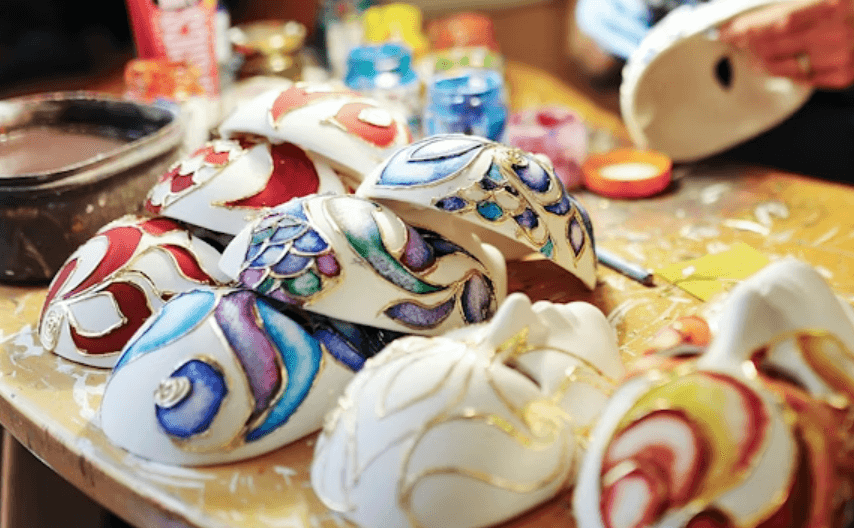
Venetian Mask Craftsmanship: Where Art Meets Tradition
Behind every authentic venetian mask lies a meticulous process that combines artistic vision with centuries-old craftsmanship. Unlike industrial accessories, Venetian masks are born from skilled hands, patient work, and a deep respect for tradition.
The creation process begins with the shape. Artisans often use molds derived from historical designs, ensuring continuity with classic Venetian styles. Once the base is formed, usually with layers of papier-mâché, the mask is left to dry naturally. This step is crucial, as it gives the mask strength while keeping it lightweight and comfortable to wear.
After drying, the surface is refined by hand. Imperfections are smoothed, edges are shaped, and details are enhanced. This is where craftsmanship truly emerges: every curve of the nose, every contour around the eyes, contributes to the character of the final piece. Even masks of the same model can look different, as each artisan leaves a subtle personal mark.
Decoration is the most expressive phase of creating a venetian mask. Traditional techniques include hand painting, application of gold leaf, and the use of textured fabrics or embossed patterns. Colors are carefully chosen, often inspired by Venetian history, baroque art, or the city’s reflections on water. Gold and metallic tones symbolize luxury and nobility, while darker hues can evoke mystery and intrigue.
The cultural value of Venetian masks is inseparable from their craftsmanship. Historically, mask-makers, known as “maschereri,” were a recognized professional guild in Venice. Their work was regulated and respected, highlighting the importance of masks in daily life and festivities. This heritage still influences modern artisans, who continue to honor these standards.
Today, the appreciation for handmade Venetian masks has grown internationally. In an era of fast fashion and mass production, consumers increasingly seek authenticity and quality. A handcrafted venetian mask offers both: it is unique, durable, and rich in meaning. This makes it appealing not only to collectors, but also to interior designers, theater professionals, and art enthusiasts.
Another aspect that sets Venetian craftsmanship apart is sustainability. Traditional methods rely on simple materials and manual processes, reducing industrial waste. Choosing a handmade mask often means supporting small workshops and preserving local artistic knowledge.
Ultimately, a venetian mask is the result of time, skill, and cultural continuity. It embodies the dialogue between past and present, showing how an ancient art form can remain relevant without losing its identity. For those who value craftsmanship, owning a Venetian mask is like owning a piece of living history.