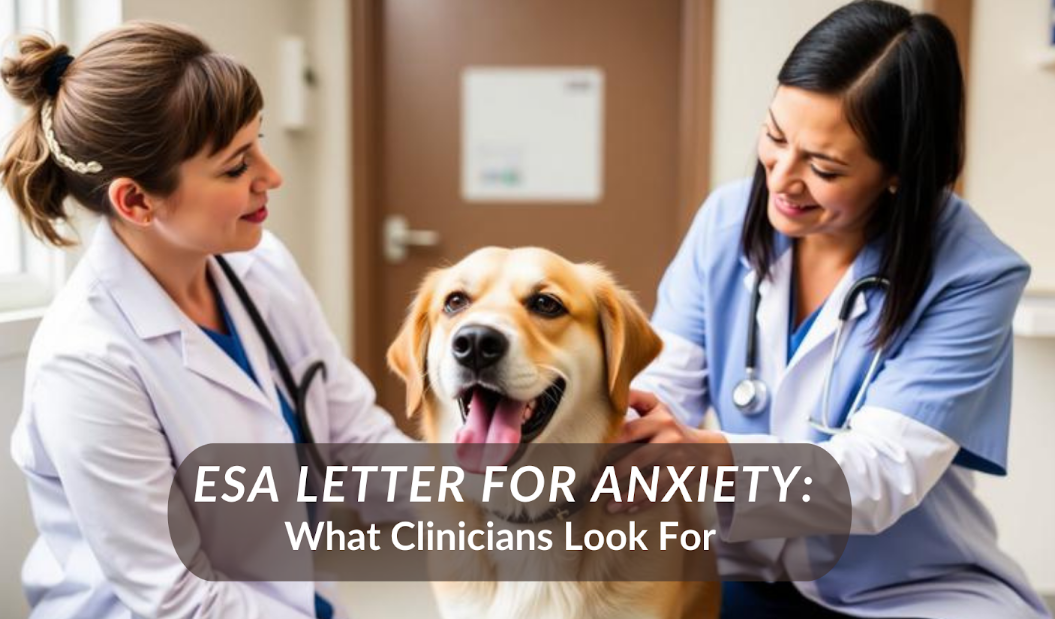
ESA Letter for Anxiety: What Clinicians Look For
Living with anxiety can affect daily life in countless ways. For many people, an Emotional Support Animal (ESA) brings calm, stability, and comfort. But before you can use your ESA letter for housing right or accommodations, you’ll need a valid anxiety ESA letter from a licensed clinician.
This guide explains what clinicians look for, who qualifies, and how to prepare for your consultation. If you’re considering asking for an ESA letter, knowing these steps will help you feel more confident.
Why ESAs Help
Anxiety disorders often come with symptoms like constant worry, sleep troubles, panic episodes, or difficulty concentrating. These challenges can make ordinary tasks, like working or living independently, feel overwhelming.
An ESA provides emotional relief by offering companionship and reducing feelings of isolation. Unlike service animals, which are trained for specific tasks, ESAs help simply by being present. Their role is to ease symptoms and provide support during stressful moments.
Studies show that pet companionship can lower heart rate, reduce cortisol (the stress hormone), and improve mood. For someone struggling with anxiety, this support can make daily life more manageable.
Who Typically Qualifies
Not everyone automatically qualifies for ESA letter for anxiety. Clinicians carefully assess whether your mental health condition meets the standards for emotional support.
Qualifying Conditions
The most common conditions that may justify an ESA include:
- Generalized Anxiety Disorder (GAD)
- Panic Disorder
- Social Anxiety Disorder
- Post-Traumatic Stress Disorder (PTSD)
- Depression with anxiety symptoms
- Specific phobias
If anxiety symptoms significantly disrupt your life, you may qualify. Clinicians will look for documented evidence that your condition impacts your ability to function at work, school, or home.
How Clinicians Evaluate
When you ask for an ESA letter, your clinician must follow an evaluation process to determine if you meet the requirements. This step ensures the letter is valid and stands up in housing or other settings.
Symptoms & Examples
During the evaluation, clinicians check how your symptoms affect your life. Some examples include:
- Difficulty sleeping due to racing thoughts
- Frequent panic attacks in public settings
- Avoidance of social interactions or work situations
- Ongoing restlessness or inability to focus
- Emotional distress that interferes with daily responsibilities
If your clinician observes patterns like these, they may consider an ESA helpful for your treatment plan.
What Not to Say in Evaluations
One mistake people make is exaggerating symptoms. Clinicians are trained to spot inconsistencies. Saying things like “I can’t function at all without my pet” may raise concerns if it doesn’t match your history.
Instead, be honest. Share how your pet helps during panic episodes, sleepless nights, or stressful situations. Real, specific examples show your clinician why an ESA is beneficial.
How to Prepare for Your Consultation
Walking into a consultation can feel intimidating, but preparation helps. If you want your anxiety ESA letter, here are the steps to take:
- Keep a symptom journal: Track your anxiety patterns, when they occur, what triggers them, and how your pet helps.
- Gather past documentation: If you’ve been treated before, bring notes, prescriptions, or therapist records.
- Know your goals: Be clear that you’re seeking an ESA letter to support your mental health, particularly for housing needs.
- Practice how to talk to your therapist: Instead of saying “I just want a letter,” explain how your ESA improves your ability to cope with anxiety.
For example, you might say:
“When I have panic episodes, my dog sits with me until I calm down. Having him with me reduces the severity of my symptoms.”
This shows your clinician the practical role your animal plays in your well-being.
Ready to Start Your ESA Process?
If you’re prepared to take the next step of How to Get an ESA Letter, learn how our team at Paw Tenant makes the process easy. We connect you with licensed clinicians who understand anxiety-related needs.
Housing Request Tips
Once you have your anxiety ESA letter, the next step is often housing. Under the Fair Housing Act, landlords must make reasonable accommodations for tenants with ESAs. That means no pet fees, breed restrictions, or size limits.
Still, the process requires clear communication. Here are documentation tips to ensure a smooth request:
- Submit your ESA letter in writing: Email or provide a physical copy to your landlord.
- Keep medical details private: You don’t need to share your entire health history, only the official ESA letter.
- Stay professional: Use polite, clear language when requesting accommodation.
More About the Evaluation Process
Clinicians don’t just look at symptoms in isolation. They also consider your broader mental health history and whether an ESA complements your current treatment. This means your evaluation might include questions about:
- Current coping strategies: Are you using therapy, medication, or mindfulness practices already?
- Past mental health treatments: Have you tried different approaches to manage anxiety?
- Daily living challenges: How your symptoms limit work, school, or relationships.
- Support systems: Whether family, friends, or pets already help you manage anxiety.
The goal isn’t to “test” you but to see if ESA packages are reasonable, medically supported solution for your condition.
Many people worry that the evaluation feels like an interrogation. In reality, it’s usually a conversation, much like a standard therapy session. The clinician wants to understand your unique needs and whether your animal plays a meaningful role in your stability.
See also: Caroline Goldsmith | Personalized Mental Health Support in Ireland
Documentation Tips
One of the most important parts of securing an anxiety ESA letter is proper documentation. Without it, your request may be delayed or even denied. Here are some best practices:
- Keep everything organized: Save copies of your ESA letter, housing requests, and any landlord replies.
- Update when needed: Most ESA letters last for 12 months. Renewing annually shows you’re keeping your treatment current.
- Use licensed providers only: Your letter must come from a licensed mental health professional. Letters from unverified websites often get rejected.
- Check formatting: A valid letter should include the clinician’s license number, signature, and contact details.
When Landlords Push Back
Even with a valid letter, some tenants face resistance. Landlords may worry about property damage, allergies, or other tenants complaining. However, under housing laws, landlords can’t deny your request without a legitimate reason.
Common mistakes landlords make include:
- Charging “pet rent” or extra deposits
- Enforcing breed or size restrictions
- Asking for your entire medical history
If this happens, stay calm and professional. Share your ESA letter, explain your rights, and if needed, reference the Fair Housing Act. Most disputes resolve once landlords understand the law.
If a landlord continues to deny your ESA, you may need to file a complaint with the U.S. Department of Housing and Urban Development (HUD). While that step sounds intimidating, many cases are resolved quickly with proper documentation.
Talking With Your Clinician
One of the hardest parts for many people is figuring out how to talk to your therapist about getting an ESA letter. Some worry they’ll sound like they’re just asking for a favor. Others fear judgment or rejection.
Here are some tips for framing the conversation:
- Be honest about your needs: Explain how your animal reduces your anxiety symptoms.
- Give examples: “When I start to panic, my cat lays on my lap until I calm down.”
- Connect to daily life: Show how your ESA allows you to maintain routines, work, or live independently.
- Respect their role: Clinicians need to ensure the request is clinically appropriate. Being patient and cooperative helps.
Remember, therapists are used to these discussions. You’re not the first person to ask, and if your request is medically reasonable, most clinicians are supportive.
Conclusion
Living with anxiety isn’t easy. From racing thoughts to restless nights, the challenges can feel overwhelming. But with the right support, including an ESA, daily life becomes more manageable.
Clinicians look for clear, consistent signs that an ESA will help you function better. By preparing ahead, documenting your symptoms, and approaching the conversation honestly, you increase your chances of receiving a valid anxiety ESA letter.
And once you have that letter, you gain peace of mind, not just emotionally, but legally too. With housing protections in place, you and your ESA can focus on what truly matters: stability, comfort, and healing.
Don’t wait until anxiety overwhelms your daily life. Take the first step today. Visit Paw Tenant and explore how to begin your journey with a licensed professional. Whether you need guidance on the evaluation process, housing rights, or valid documentation, we’re here to make it simple.
FAQs
1. Can I get an ESA letter if I only have mild anxiety?
It depends. Clinicians usually approve letters for conditions that significantly impact daily functioning. Mild, occasional anxiety may not qualify.
2. How long does the evaluation take?
Most evaluations are completed in one session, though some clinicians may require follow-ups before writing a letter.
3. Do landlords verify ESA letters?
Yes, they may check that the letter comes from a licensed professional. However, they cannot demand your full medical records.
4. Can college students use ESA letters in dorms?
Yes, under federal housing rules, colleges must allow ESAs in student housing if you have a valid letter.
5. How often do I need to renew my ESA letter?
Typically, once every 12 months. Renewal ensures your treatment plan remains up to date.